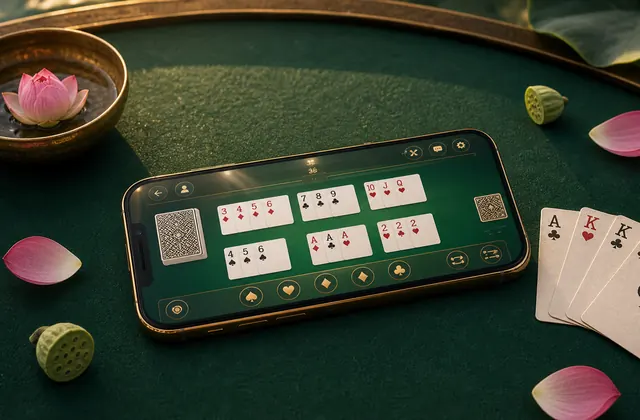
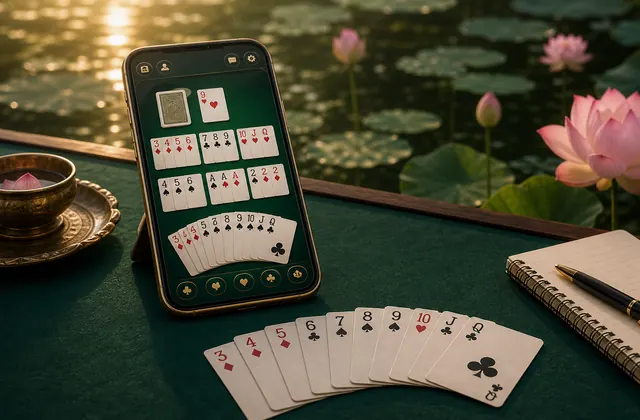
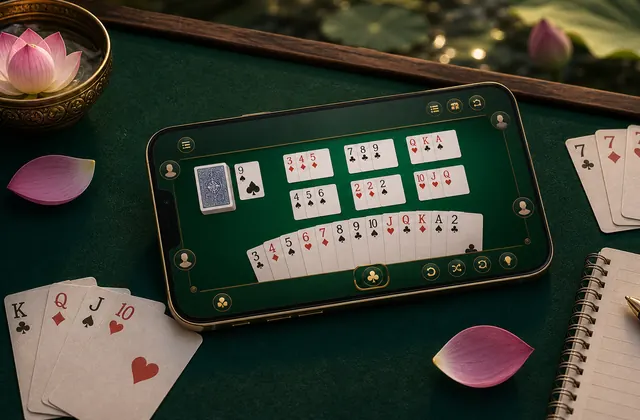
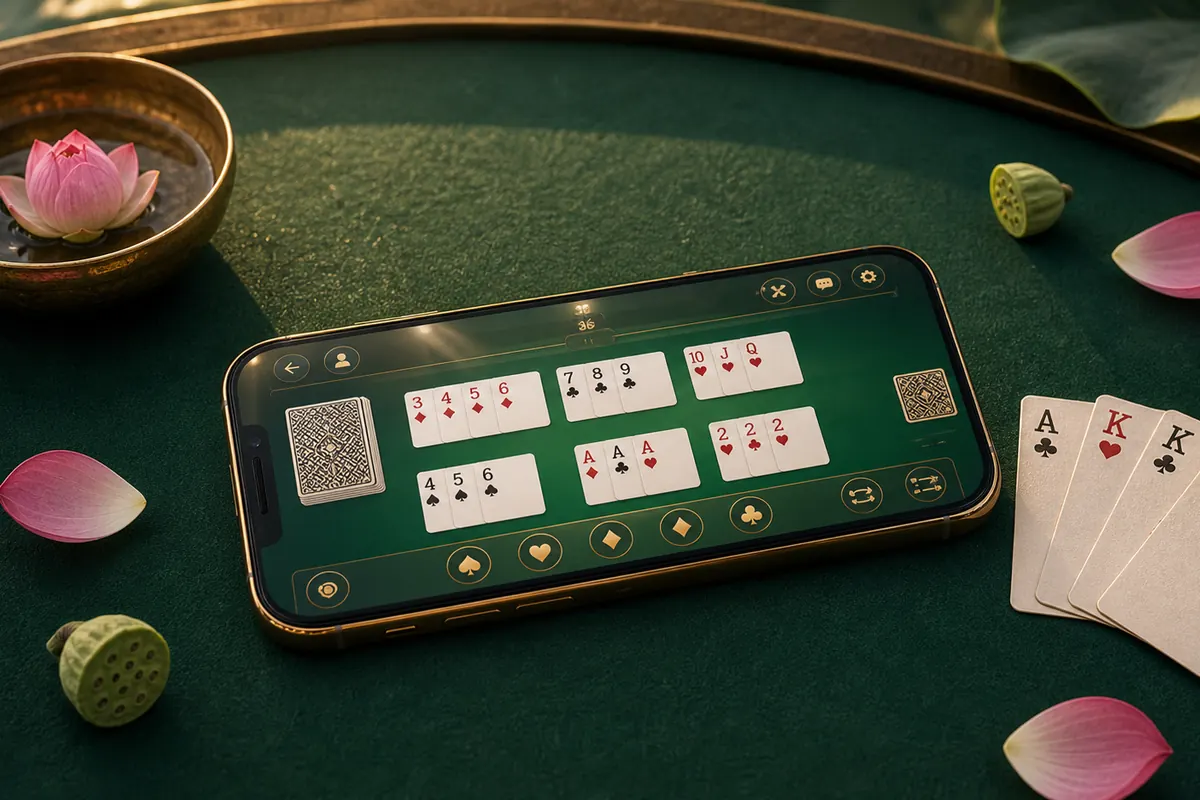
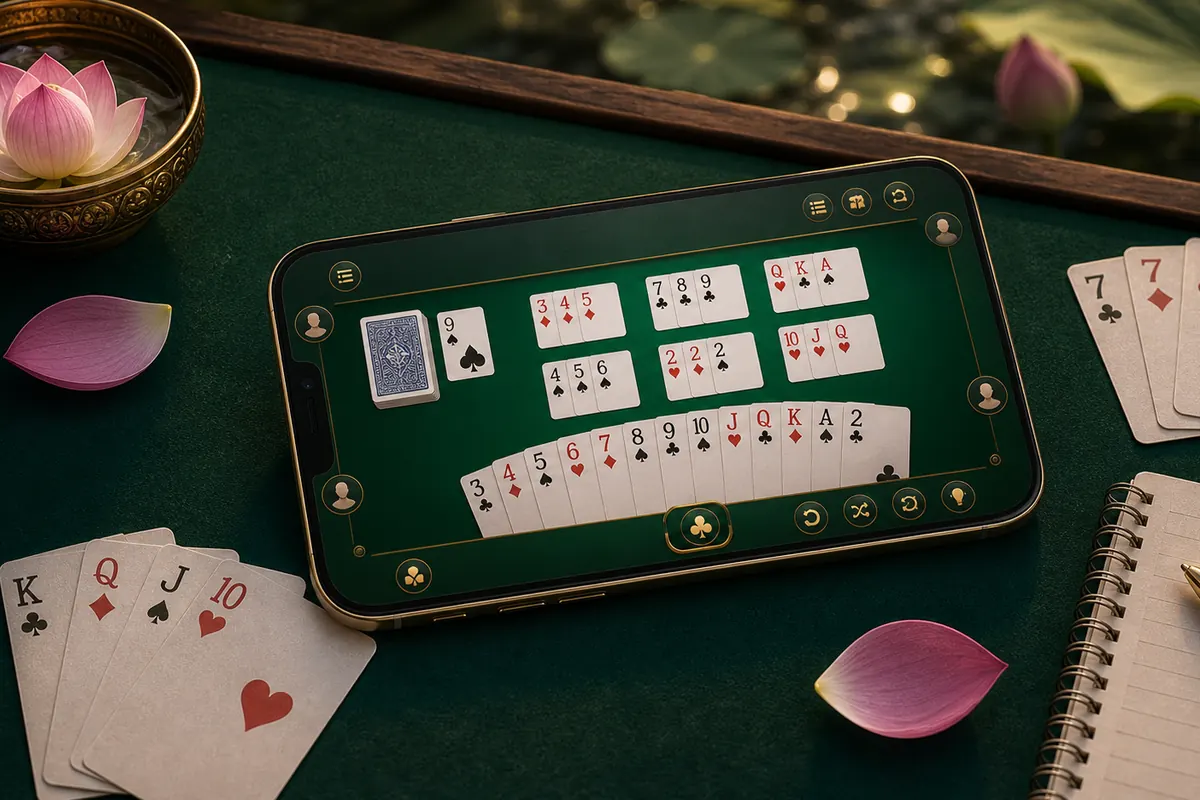
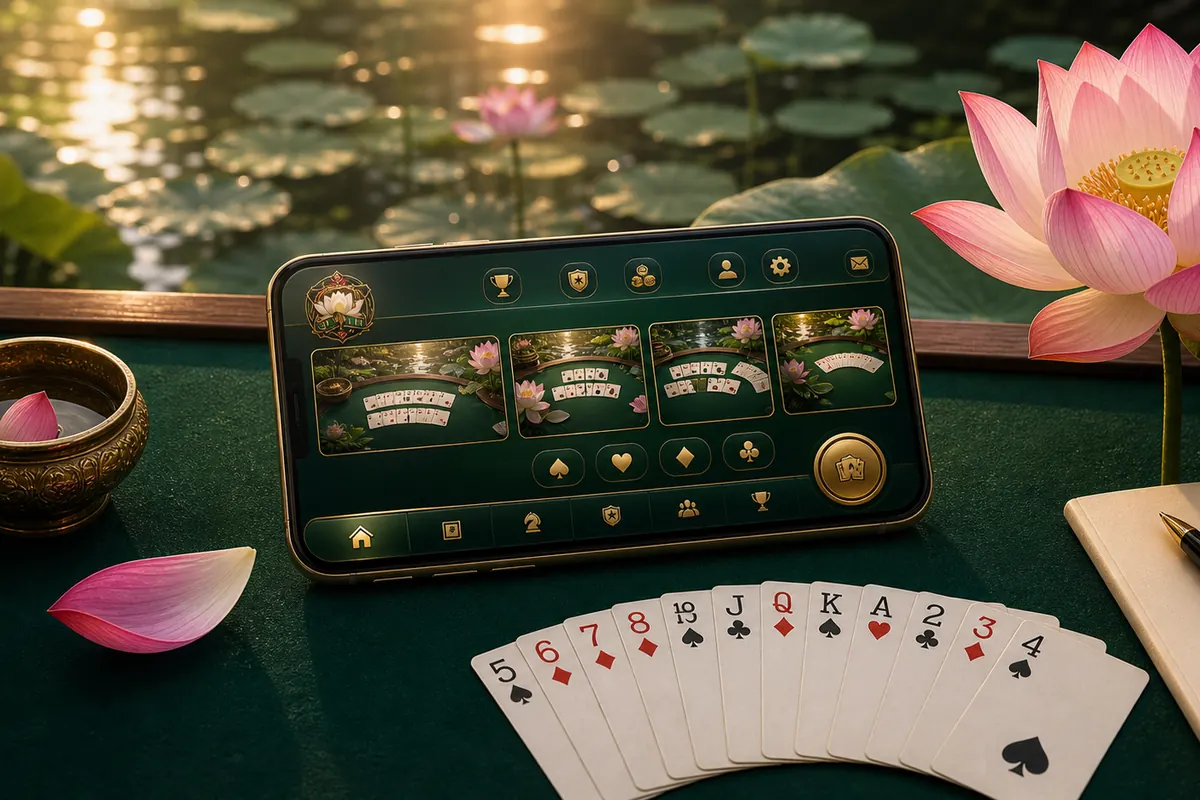
Thirteen cards
Your goal is to organise the complete hand into valid sequences and sets before declaring.
Living rulebook · browser classroom
Read the origin with the uncertainty left intact, learn the six essential rule ideas, and practise a complete draw–discard–group cycle without installing an app.
A name is not an affiliation: the modern “Yono Rummy” label refers here to an Indian Rummy game context. SBI launched YONO as its digital banking platform in 2017. This classroom is not YONO SBI, not a bank page and not a real-money game.
Chapter one
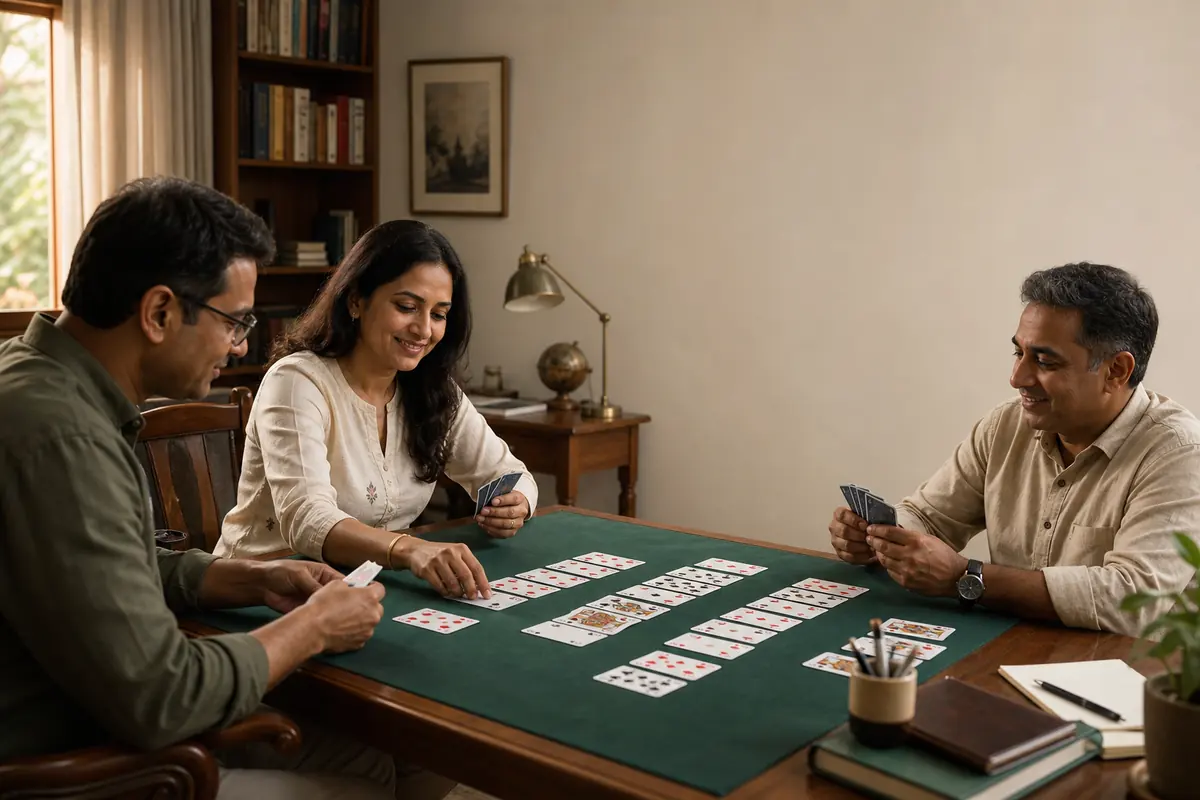
What we can say: Indian Rummy is a widely played Indian member of the wider rummy family, commonly organised around a 13-card hand. Pagat also records the social name “Paplu” in India.
What remains uncertain: India has older card traditions, including Ganjifa, but the evidence does not establish a simple direct line from a Mughal or Ganjifa game to modern 13-card Indian Rummy. Treat confident one-sentence origin stories with caution.
Chapter two
Your goal is to organise the complete hand into valid sequences and sets before declaring.
Draw from the closed or open pile, then discard one card. You begin and end a normal turn with thirteen cards.
Three or more consecutive cards of one suit without a Joker substitute, such as 4♦–5♦–6♦.
A same-suit run completed with a Joker. A may be low or high, but it does not wrap in K–A–2.
Three or four cards of the same rank in different suits. A duplicate suit is not a natural set.
A common standard needs at least two sequences, one pure, with every remaining card in a valid group.
House rules matter: deck count, printed Jokers, wild Jokers, scoring and some declaration details vary between families, clubs and apps.
Chapter three · try it
Click cards to select them. Draw one, discard one, sort the hand, then place likely sequences or sets into groups. The hint is a learning aid, not a score or promise.
Preparing your lesson hand…
Chapter four
Use the visual comparison before another deal.
Study pure sequencesDownloading is optional. Learn first, then check the separate APK guidance and device permissions.
Open learning guide
13-card rule learning · practice with friends · learn rules then install.
 Open learning guide